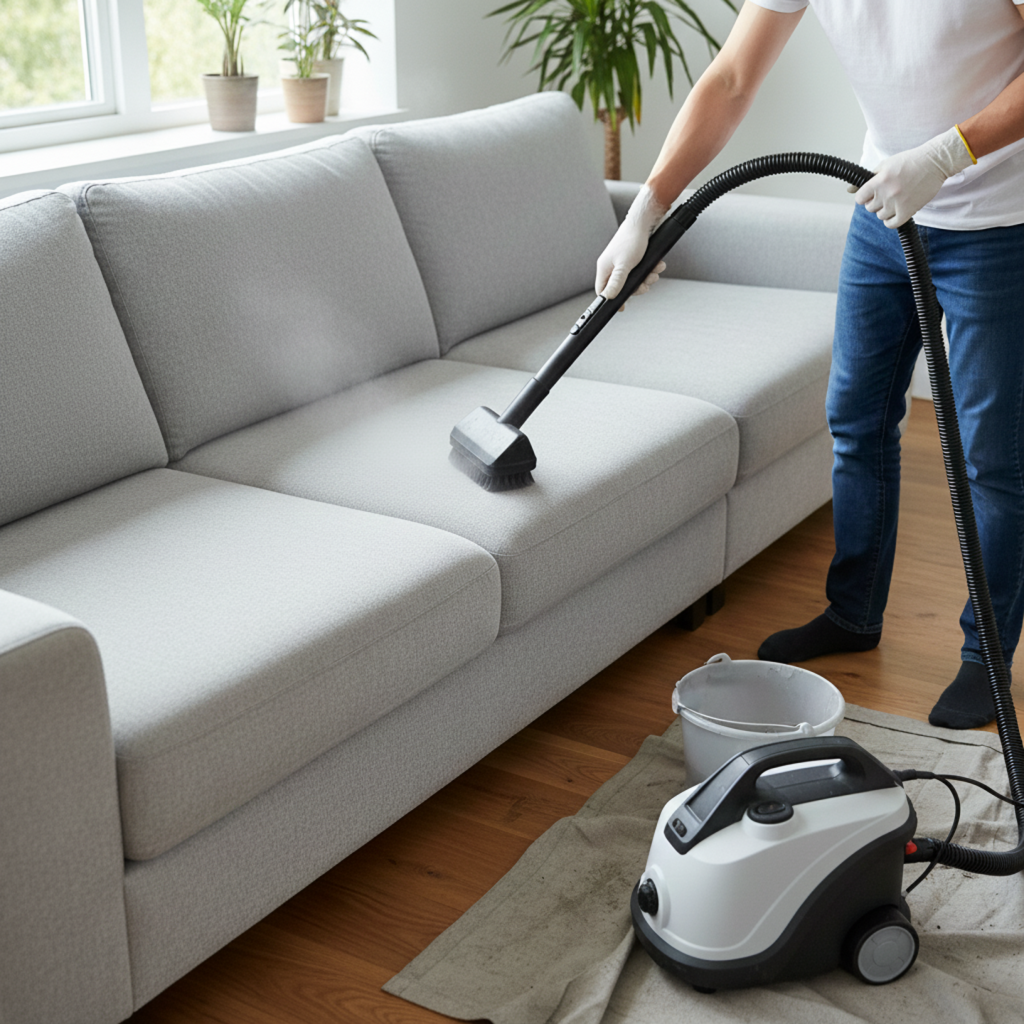
Keeping your couch clean is important for comfort, health, and home hygiene, especially in a city like Chicago, where dust, moisture, pets, and seasonal weather can quickly affect upholstery. Steam cleaning is one of the most effective ways to deep clean a couch without harsh chemicals. It removes dirt, allergens, bacteria, and odors while refreshing the fabric.
This guide explains how to clean a couch with a steam cleaner step by step, which fabrics are safe, common mistakes to avoid, and when professional upholstery cleaning may be a better option. Everything is written to help homeowners and renters in Chicago clean their couches safely and correctly.
What Is Steam Cleaning for Upholstery?
Steam cleaning uses hot water vapor to loosen and lift dirt from upholstery fabric. The steam penetrates deep into the couch fibers, breaking down stains, body oils, dust mites, and allergens. Unlike surface cleaning, steam cleaning provides deep upholstery cleaning without soaking the fabric when done properly.
Steam cleaning is commonly used for:
- Upholstery and fabric couches
- Sofa cushions and armrests
- High-use seating areas
- Homes with kids or pets
Is Steam Cleaning Safe for All Couches?
Not every couch can be steam cleaned. Before you start, always check the manufacturer’s care tag, usually found under the cushions.
Upholstery Cleaning Codes Explained
- W – Water-based cleaning is safe (steam cleaning allowed)
- WS or SW – Water or solvent-based cleaning is safe
- S – Solvent only (do NOT steam clean)
- X – Vacuum only (no water or steam)
If your couch has an S or X code, steam cleaning can damage the fabric.
Couch Fabrics That Are Usually Safe for Steam Cleaning
Steam cleaning works best on durable upholstery fabrics, including:
Natural & Synthetic Fabrics
- Cotton
- Linen (low steam only)
- Polyester
- Nylon
- Acrylic
- Microfiber (most types)
- Fabric blends
Fabrics That Need Extra Care
- Wool (low heat, fast drying)
- Silk (not recommended for DIY steam cleaning)
Materials to Avoid
- Leather or faux leather
- Velvet
- Suede
These materials require specialized professional upholstery cleaning, not DIY steam cleaning.
Tools You Need to Steam Clean a Couch
Before starting, gather the right tools to avoid damage.
Required Items
- Upholstery-safe steam cleaner
- Vacuum with upholstery attachment
- Microfiber cloths
- Soft brush (optional)
- Distilled water
Avoid using strong detergents unless the steam cleaner manual allows it.
Step-by-Step: How to Clean a Couch with a Steam Cleaner
Step 1: Vacuum the Couch Thoroughly
Vacuuming removes loose dirt, crumbs, pet hair, and dust. This step is critical because steam can push dry debris deeper into the upholstery if skipped.
Focus on:
- Seat cushions
- Armrests
- Creases and seams
Step 2: Spot Test Before Steam Cleaning
Test the steam cleaner on a hidden area of the couch. Wait 10–15 minutes to check for:
- Color bleeding
- Shrinking
- Fabric damage
If the fabric looks fine, continue.
Step 3: Prepare the Steam Cleaner
- Fill the machine with distilled water
- Attach the upholstery tool
- Set the steam level to low or medium
Never overheat upholstery fabric.
Step 4: Steam Clean in Small Sections
Move slowly and clean one section at a time.
Best practices:
- Keep the nozzle moving
- Do not oversaturate
- Use short steam bursts
- Follow the fabric grain
Steam loosens dirt, while suction (if included) pulls it out.
Step 5: Wipe Away Moisture
Use a clean microfiber cloth to wipe excess moisture after each section. This prevents water marks and speeds up drying.
Step 6: Let the Couch Dry Completely
Drying is very important in Chicago’s humid seasons.
Tips for faster drying:
- Open windows (weather permitting)
- Use fans
- Turn on air conditioning or a dehumidifier
Avoid sitting on the couch until it is fully dry (usually 4–8 hours).
Deep Cleaning a Couch: How Often Should You Steam Clean?
For most Chicago homes:
- Every 6–12 months for general use
- Every 3–6 months if you have pets or allergies
Regular steam cleaning improves indoor air quality and extends couch life.
DIY Steam Cleaning vs Professional Upholstery Cleaning
Both options have benefits. Choosing the right one depends on your situation.
DIY Steam Cleaning – Pros
- Lower cost
- Convenient
- Good for routine maintenance
- No chemicals
DIY Steam Cleaning – Cons
- Risk of fabric damage
- Limited stain removal
- Slower drying if done incorrectly
Professional Upholstery Cleaning – Pros
- Fabric-specific methods
- Stronger equipment
- Better stain and odor removal
- Faster and safer drying
Professional Upholstery Cleaning – Cons
- Higher cost
- Requires scheduling
For expensive couches, delicate fabrics, or heavy staining, professional deep upholstery cleaning is usually safer.
Common Mistakes to Avoid When Steam Cleaning a Couch
Many upholstery problems come from simple mistakes.
Avoid:
- Skipping the vacuum step
- Using too much steam
- Cleaning leather or velvet
- Sitting on the couch before it dries
- Ignoring fabric care codes
These mistakes can cause mold, odors, or permanent damage.
Can the Same Steam Cleaner Be Used on Other Surfaces?
Some steam cleaners are designed for multiple surfaces.
Safe (If Manufacturer Allows)
- Carpet (with proper attachment)
- Mattress (light steam only)
Important Note
Steam cleaning carpets and mattresses requires different techniques and attachments. This guide focuses only on couch and upholstery cleaning, as improper use can reduce effectiveness or cause damage.
Health Benefits of Steam Cleaning Upholstery
Steam cleaning is not just about appearance.
Benefits include:
- Reduces allergens
- Kills bacteria and germs
- Removes dust mites
- Improves indoor air quality
This is especially helpful for Chicago homes with seasonal allergies.
How to Keep Your Couch Clean Longer After Steam Cleaning
- Vacuum weekly
- Clean spills immediately
- Rotate cushions
- Avoid eating on fabric couches
- Use washable covers if possible
These habits reduce the need for frequent deep cleaning.
FAQs: Cleaning a Couch with a Steam Cleaner
Can I steam clean my couch without vacuuming first?
No. Vacuuming is necessary to remove loose dirt before steam cleaning.
How long does a couch take to dry after steam cleaning?
Usually 4–8 hours, depending on humidity and airflow.
Is steam cleaning safe for microfiber couches?
Yes, most microfiber couches are safe if labeled W or WS.
Can steam cleaning remove pet odors?
Steam cleaning helps reduce odors, but strong pet smells may need professional treatment.
How often should upholstery be deep cleaned?
Every 6–12 months, or more often for homes with pets or allergies.
Is steam cleaning better than shampooing a couch?
Steam cleaning uses less moisture and leaves fewer residues, making it safer for most upholstery.
Final Thoughts
Learning how to clean a couch with a steam cleaner helps Chicago homeowners maintain a healthier and fresher living space. When done correctly, steam cleaning offers deep upholstery cleaning without harsh chemicals. Always follow fabric care instructions, avoid over-wetting, and know when professional upholstery cleaning is the better choice.
This method improves cleanliness, comfort, and the lifespan of your couch, making it a smart part of regular home care.