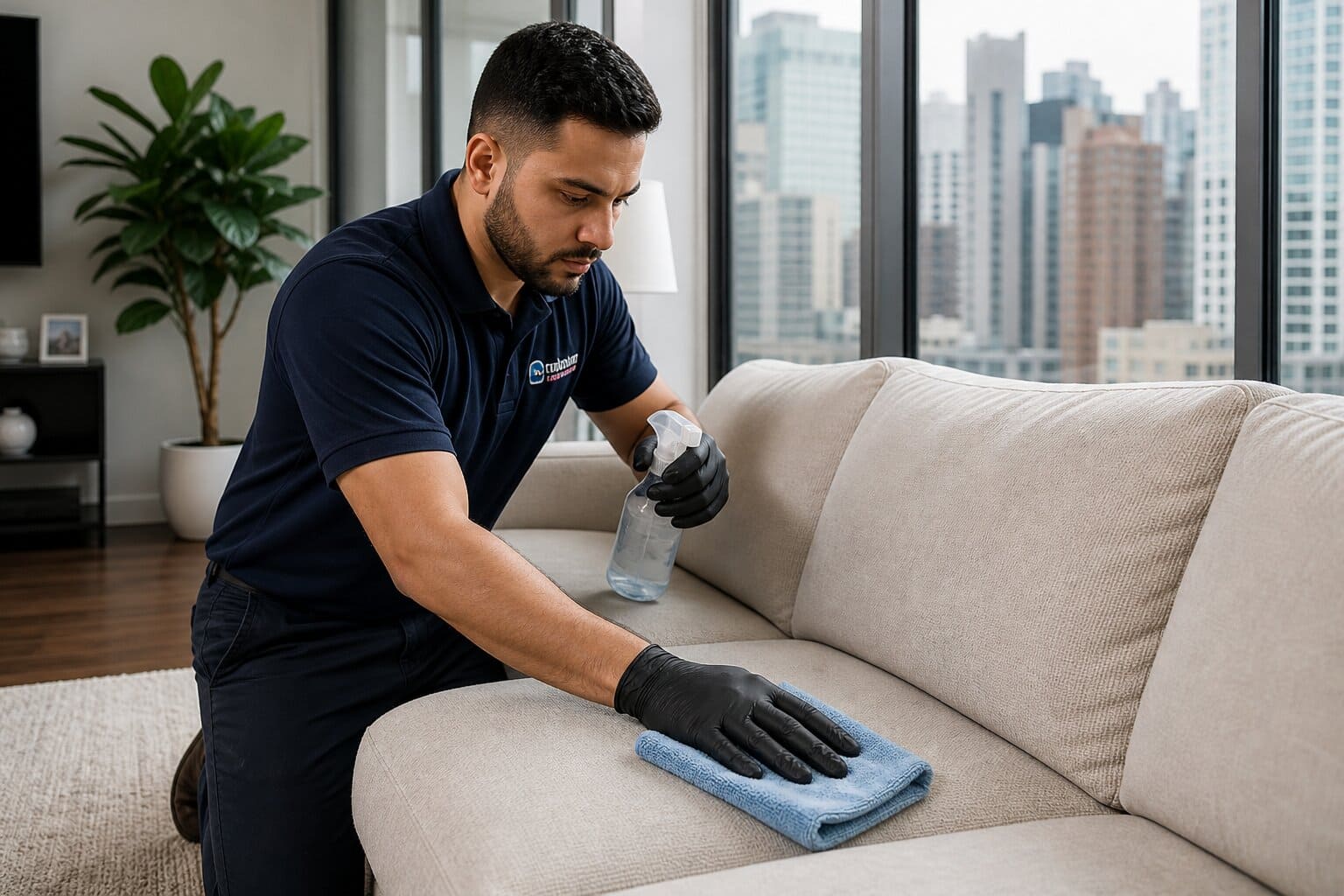
Keeping your furniture clean in a busy city like Chicago can be challenging. Dust, pollution, pet hair, and daily use can quickly make your sofa look dull and dirty. The safest way to clean upholstery without damaging fabric in Chicago is to use gentle cleaning methods, avoid too much water, and always test products before use. With the right steps, you can keep your furniture fresh and long-lasting without causing damage.
Why Upholstery Gets Dirty Faster in Chicago Homes
Homes across Chicago—whether in downtown apartments or neighborhoods like Lincoln Park and Hyde Park—face unique cleaning challenges.
Here’s why your upholstery gets dirty faster:
- Air pollution and dust from city traffic
- Cold winters that bring moisture indoors
- Pets are spending more time inside
- Daily use by family and guests
Because of these factors, regular upholstery cleaning in Chicago is very important to maintain a clean and healthy home.
Know Your Fabric Before You Start Cleaning
Before cleaning your sofa or chairs, you must understand the fabric type. Using the wrong method can cause fading, shrinking, or permanent damage.
Common Upholstery Fabrics
- Cotton: Soft but absorbs water quickly
- Linen: Delicate and wrinkles easily
- Microfiber: Durable and easier to clean
- Leather: Needs special care and products
- Polyester: Strong and stain-resistant
Check the Cleaning Code Tag
Most furniture has a tag with cleaning codes:
- W: Safe with water-based cleaners
- S: Use solvent-based cleaners only
- WS: Both methods are safe
- X: Vacuum only (no liquids)
Always follow this tag to avoid damage.
Tools You Need for Safe Upholstery Cleaning
Using the right tools makes cleaning easier and safer.
Essential Cleaning Tools
- Vacuum cleaner with brush attachment
- Microfiber cloths
- Mild cleaning solution
- Baking soda
- White vinegar
- Soft brush
- Spray bottle
Avoid harsh chemicals. They can damage fabric and fade colors.
Step-by-Step Upholstery Cleaning Without Damaging Fabric
Follow this safe method used by many professional upholstery cleaners in Chicago:
Step 1: Vacuum Thoroughly
Start by removing dust and dirt.
- Focus on corners and edges
- Use a soft brush attachment
- Move slowly for better results
This step prevents dirt from spreading during cleaning.
Step 2: Always Do a Spot Test
Before applying any cleaner:
- Test on a hidden area
- Wait 10–15 minutes
- Check for color fading or damage
This small step can save your furniture.
Step 3: Use a Gentle Cleaning Solution
You can make a safe DIY cleaner at home:
- 1 cup warm water
- 1 tablespoon white vinegar
- 1 teaspoon dish soap
Mix gently.
This solution works well for most fabric sofas and is widely used in eco-friendly cleaning.
Step 4: Clean Gently (Do Not Scrub)
- Dip a cloth into the solution
- Wring it out until slightly damp
- Gently blot the fabric
Never scrub hard. It can damage fibers and spread stains.
Step 5: Treat Stains Carefully
For stains:
- Blot, do not rub
- Apply small amounts of cleaner
- Repeat slowly if needed
Patience is key to avoiding damage.
Step 6: Dry the Fabric Properly
Drying is very important, especially in Chicago’s humid seasons.
- Use a dry towel to absorb moisture
- Open windows for airflow
- Use a fan if needed
Avoid heat drying. It can shrink or damage fabric.
Best Upholstery Cleaning Methods for Chicago Homes
Different fabrics need different cleaning methods.
Steam Cleaning (Use Carefully)
Steam cleaning is popular for deep cleaning, but it must be used carefully.
✔ Removes deep dirt
✔ Kills bacteria
Too much moisture can damage fabric
Only use for fabrics labeled “W” or “WS”.
Dry Cleaning Method
- Uses very little moisture
- Safe for delicate fabrics like linen
A good option for sensitive furniture.
Baking Soda Cleaning
- Sprinkle baking soda on the fabric
- Leave for 20–30 minutes
- Vacuum it off
✔ Removes odor
✔ Freshens upholstery
Common Upholstery Cleaning Mistakes to Avoid
Avoid these mistakes to protect your furniture:
- Using too much water
- Scrubbing too hard
- Skipping the patch test
- Using bleach or strong chemicals
- Not drying properly
These mistakes can cause permanent damage.
How to Clean Different Types of Upholstery
Microfiber Sofa
- Use a light cleaning solution
- Avoid soaking
- Brush lightly after drying
Cotton Upholstery
- Use minimal water
- Dry quickly to prevent shrinkage
Leather Furniture
- Use special leather cleaners
- Avoid water and vinegar
Polyester Fabric
- More durable
- Works well with mild cleaners
Natural Upholstery Cleaning Options
Many Chicago homeowners prefer eco-friendly cleaning methods.
Safe Natural Solutions
- Vinegar + water → removes odor
- Baking soda → absorbs smells
- Lemon juice → light stain removal
These are safe, affordable, and effective.
DIY vs Professional Upholstery Cleaning in Chicago
DIY Cleaning
✔ Low cost
✔ Good for small stains
❌ Not deep cleaning
❌ Risk of damage
Professional Upholstery Cleaning
✔ Deep cleaning results
✔ Safe for delicate fabrics
✔ Better stain removal
❌ Higher cost
Many homeowners choose professional services like One Clean LLC for better and safer results, especially for delicate or expensive furniture.
How Often Should You Clean Upholstery?
- Vacuum: every 1–2 weeks
- Deep clean: every 6–12 months
- Clean spills immediately
Regular cleaning helps your furniture last longer.
Tips to Keep Upholstery Clean Longer
- Use sofa covers
- Avoid eating on furniture
- Keep pets off couches
- Clean spills quickly
- Vacuum regularly
These habits reduce damage and keep furniture fresh.
Signs Your Upholstery Needs Cleaning
Look for these signs:
- Bad smell
- Visible stains
- Faded color
- Allergy symptoms
- Sticky or rough texture
These signs mean it’s time to clean your furniture.
Expert Tip for Chicago Homeowners
Professional cleaners in Chicago recommend avoiding over-wetting upholstery. Too much moisture can lead to mold growth, especially during humid months. Always use minimal water and ensure proper airflow while drying.
Is Steam Cleaning Safe for Upholstery?
Yes, steam cleaning is safe when used correctly. Always check the fabric label first and avoid excessive moisture. For delicate fabrics, choose dry or low-moisture methods instead.
FAQs (Chicago Upholstery Cleaning Guide)
Can you clean upholstery without damaging fabric?
Yes, you can clean upholstery safely by using gentle cleaning solutions, avoiding excess water, and always testing products before use.
What is the safest way to clean upholstery?
The safest method is vacuuming regularly and using mild cleaning solutions with a soft cloth.
Does vinegar damage upholstery?
Vinegar is safe when diluted with water, but always test it on a small, hidden area first.
How long does upholstery take to dry in Chicago?
Drying usually takes 4–8 hours, but it may take longer during humid weather.
When should I hire professional upholstery cleaners in Chicago?
If your furniture is delicate, heavily stained, or expensive, it is best to hire professionals for safe and deep cleaning.
Is One Clean LLC a good choice for upholstery cleaning in Chicago?
Yes, One Clean LLC is known for using safe and effective cleaning methods that protect fabric while removing deep dirt, allergens, and stains.
Final Thoughts
Cleaning upholstery the right way is important, especially in a city like Chicago where dust, moisture, and daily use can affect your furniture quickly. By following safe cleaning methods, using the right tools, and avoiding common mistakes, you can keep your upholstery clean without damaging the fabric.
If you want deep cleaning without any risk, One Clean LLC offers safe and reliable upholstery cleaning services in Chicago. Their team uses fabric-safe techniques to protect your furniture while delivering long-lasting, professional results.